
The Ultimate Perimeter Defense
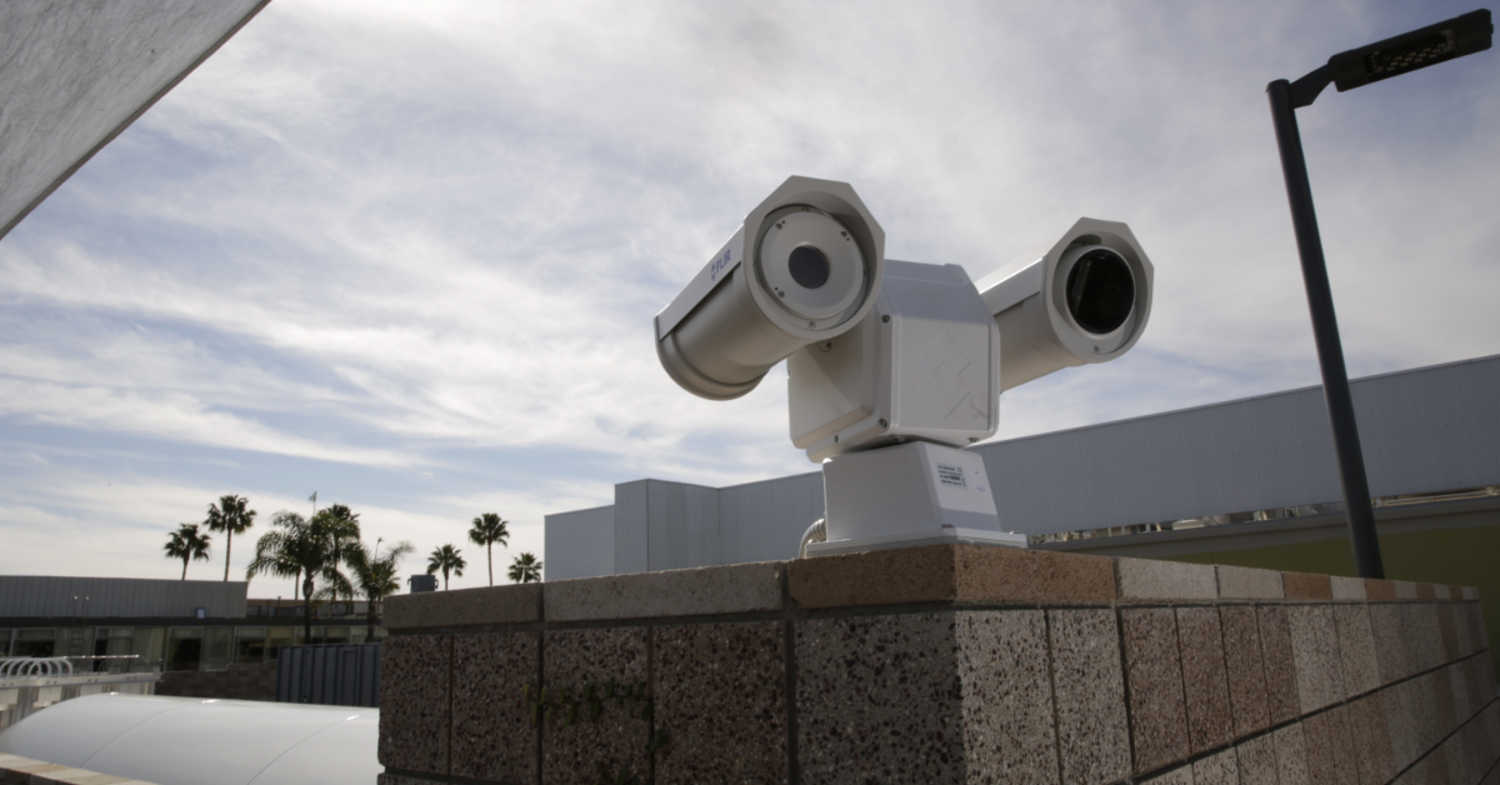
Perimeter protection is a game of certainty. You need to know what is moving, where it’s going, and how to respond—without drowning operators in false alarms or missing critical events in bad weather or darkness.
The most reliable way to achieve that certainty is to map out security coverage that pairs commercial radar for wide-area detection with thermal cameras for all-condition verification—then orchestrate them for automated handoffs and centralized control, and manage the output through an enterprise-grade video management system.
The result is a perimeter system that’s proactive, precise, and built for real-world complexity.
Each sensing layer solves a different problem. Together, they eliminate the biggest sources of perimeter risk.
Radar provides range, angle, and velocity for moving targets across broad perimeters—day or night, through fog, rain, or dust. It’s ideal for large yards, multi-lane approaches, or open sites where single-camera coverage falls short. Radar dramatically cuts nuisance alarms from irrelevant motion by tracking targets rather than reacting to pixel changes.
Thermal cameras recognize people and vehicles by heat signature, regardless of poor lighting, glare, or complex backgrounds. They deliver consistent detection and reduce false triggers from shadows, headlights, and moving foliage—adding the confidence operators need before escalating events.
Flir Nexus synchronizes the two layers. A radar track crossing a virtual boundary can automatically cue a thermal camera to verify the target. If confirmed, Nexus pushes a prioritized event to the video management system (more below) and can direct a visible pan-tilt-zoom to capture details such as license plates, uniforms, and other context. Operators see one coherent incident rather than disjointed alerts.

Headlights, wildlife, and wind-tossed vegetation generate a steady churn of false alarms, while visible cameras can falter after dark or in harsh weather. With lean teams and limited budgets, few sites can afford systems that demand constant calibration to remain credible.
A layered design restores certainty with restraint. A radar ring establishes continuous perimeter awareness, tracking movement across entry points and fence lines. Thermal cameras then verify those tracks at choke points and higher-risk zones, separating genuine threats from background motion. Where evidential detail is required, an optional visible PTZ is cued only when behaviour meets defined thresholds—speed, direction, or dwell time—bringing clarity without constant human vigilance.
The result is simple: fewer false alarms and wasted dispatches, faster mean time to awareness through automated cueing, and a cost-effective path to scale.

Nexus® Bundle: Elara™ DX-Series + R190 / R290 with Flir Nexus Logic
A layered perimeter only delivers value if operators can act on events quickly and confidently. A video management system such as Flir United VMS (UVMS) brings your security data together into a single, scalable operational view.
Built around Latitude VMS software and Horizon and Meridian network video recorders, UVMS supports deployments ranging from a single site to multi‑site, global operations. Its flexible integration framework—extended through plugin‑based integrations from the Flir Applications & Integration Center (AIC)—allows security teams to manage complex systems from one operating platform.
UVMS natively supports radar‑driven perimeter workflows, displaying moving targets on a GIS map and automatically assigning PTZ cameras to track them based on configurable rules. Integrations support a variety of Flir-brand radars, with options to prioritize targets, control camera engagement ranges, and define how the VMS responds to events such as boundary crossings or alarm‑zone entry.
UVMS supports automated responses such as recording actions, PTZ movement, and alarm triggering, all of which can help reduce operator workload while ensuring consistent handling of validated events. It also offers integrated video redaction, enabling privacy‑ready exports by obscuring faces, bodies, license plates, or other sensitive elements directly from the Control Center.
Finally, tune and validate the system through live testing across day, night, and varying weather conditions, adjusting thresholds for motion persistence, speed, dwell time, and temperature, while setting clear escalation policies, operator views, and reporting schedules to ensure consistent, reliable performance.
Together with Nexus, UVMS completes the layered perimeter workflow—turning radar detection and thermal confirmation into clear, actionable incidents that operators can trust.

Following a three‑step plan can help you move from a a multilayered security concept to live monitoring.
Start by assessing and mapping your environment—identify high‑risk zones, common approach paths for vehicles and pedestrians, lighting conditions, and weather patterns, then map your perimeter and key operational hotspots.
Next, layer and automate by combining radar for wide‑area detection and track initiation, thermal imaging for all‑condition verification and people/vehicle analytics, and visible cameras for forensic detail and situational context.
Nexus rules can orchestrate the workflow from radar detection to thermal confirmation, automated PTZ zoom, and prioritized alerts in the VMS.
Before placing any security products at a site, planners need to understand the location's layout, approach paths, and coverage constraints.
The Raven site planning tool supports this critical planning phase with professional‑grade security site planning built on an intuitive, Google Maps‑based experience. By modeling a site visually, teams can identify potential vulnerabilities, understand traffic patterns, and plan sensor placement with confidence before installation begins.
Raven helps designers simulate and place key security technologies—including ground radar, PTZ cameras, and multispectral fixed cameras—directly onto the site map. The tool visualizes camera range and field of view, helping teams validate coverage, minimize blind spots, and balance wide‑area detection with targeted verification.
Raven supports perimeter projects by helping teams:
Raven turns perimeter design into a deliberate, repeatable process—ensuring that radar provides wide‑area awareness, thermal cameras are positioned for reliable confirmation, and visible cameras are placed where detail and context matter most.
Track the value of thermal + radar with metrics that reflect real operational gains:
Perimeter defense is at its best when wide-area tracking (radar) and all-condition confirmation (thermal) work in concert—and when Flir Nexus ensures those layers act as a single, intelligent system. For commercial and SMB sites, this approach cuts false alarms, accelerates response, and scales without complexity. It turns the perimeter from a reactive boundary into a proactive security engine.
Ready to build a layered perimeter? Map your risks, place your radar, anchor your thermal at choke points, and let Nexus handle the handoffs. With the right layers, every alert becomes clearer—and every decision faster.
