
Introducing code-compliant early fire detection

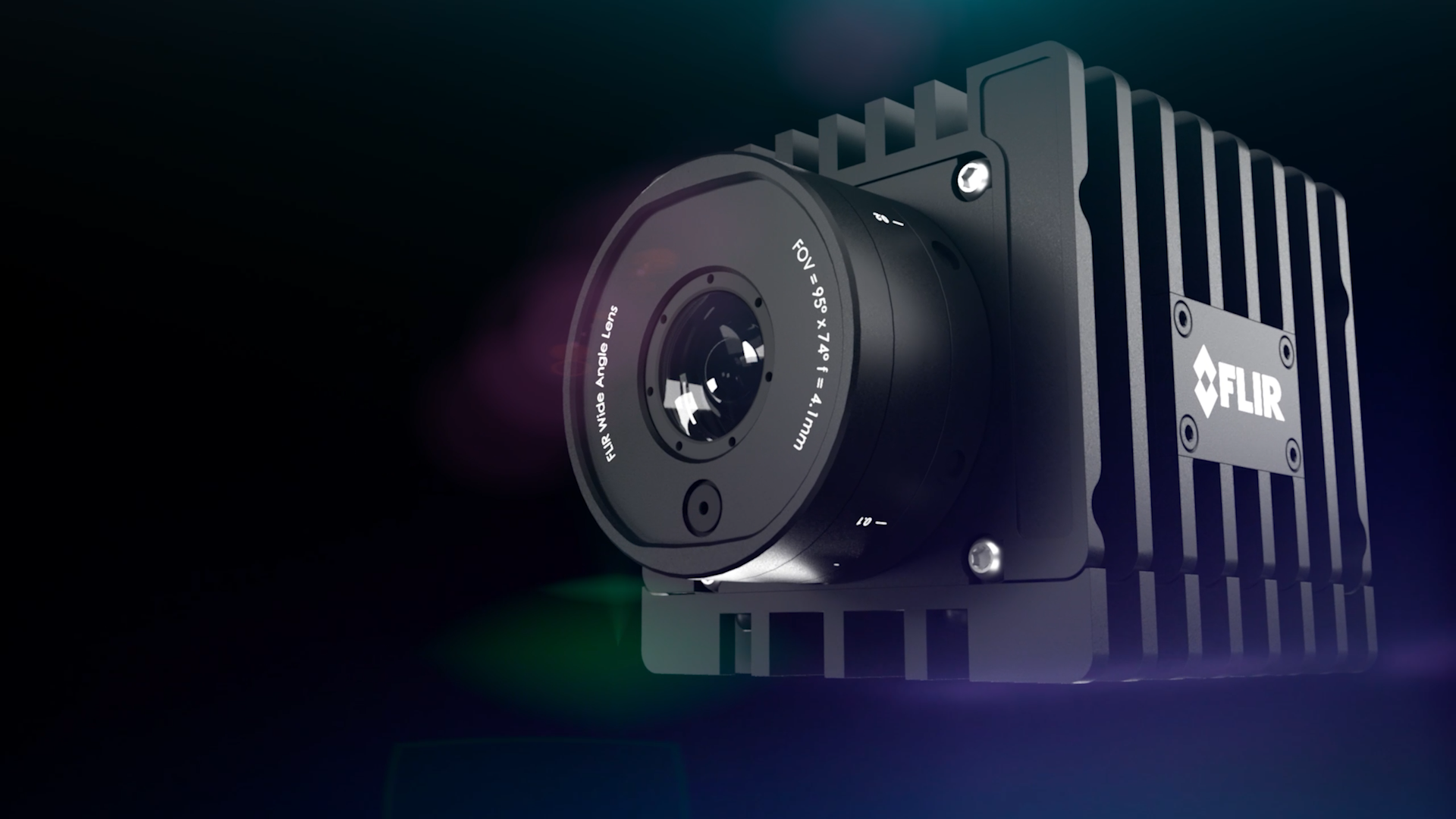
Two models, one listing. The A70 is the highest-performance option: longer range and multiple zones from a single camera. The A40 covers a single zone or room with the same alarm logic and outputs. Both pair a factory-calibrated thermal core with a 1280 × 960 visual camera, so operators see what tripped the alarm.


Specifications

Compare the performance, detection capabilities, and integration features of the FLIR A40 EFD and A70 EFD thermal image fire detectors.

SPECIFICATION FLIR A40 EFD FLIR A70 EFD
IR resolution 320 × 240 640 × 480
Visual resolution 1280 × 960 1280 × 960
Thermal sensitivity (NETD) 35 mK 35 mK
Accuracy ±2°C (±3.6°F) or ±2% of reading ±2°C (±3.6°F) or ±2% of reading
Lens options 29°, 51°, 95° 29°, 51°, 95°
Detection distance
3 × 3 pixel design basis
(12 in × 12 in target)
29°: 197 ft (60 m)
51°: 115 ft (35 m)
95°: 60 ft (18 m)
29°: 410 ft (125 m)
51°: 230 ft (70 m)
95°: 98 ft (30 m)
On-camera alarm logic Up to 20 ROIs: threshold, rate-of-rise, delta, area-percentage Up to 20 ROIs: threshold, rate-of-rise, delta, area-percentage
Digital outputs 3 × opto-isolated, 0–48 V DC, 350 mA max; 1 × dedicated NC fault output 3 × opto-isolated, 0–48 V DC, 350 mA max; 1 × dedicated NC fault output
Data interfaces Ethernet/IP, Modbus TCP, MQTT, REST, ONVIF-S Ethernet/IP, Modbus TCP, MQTT, REST, ONVIF-S
Power 7.5 W at 24 V DC typical (~0.31 A); PoE 802.3af class 3; 18–56 V DC allowed 7.5 W at 24 V DC typical (~0.31 A); PoE 802.3af class 3; 18–56 V DC allowed
Environmental IP66 IP66

Design coverage to the 3 × 3 pixel figures. Single-pixel sensing extends farther but is not a design basis. Full specifications, including single-pixel detection distances and operating temperature, are in the datasheet.


Integrates with the Fire Panel, VMS, and SCADA

Three integration pathways connect thermal fire detection to existing alarm, video monitoring, and building management systems.

⚠
FIRE ALARM

Fire Alarm Control Panel


Alarm, supervisory, and fault dry-contact outputs through listed addressable input modules on the signaling line circuit (SLC), with 24 V DC supervised power.

▶
VIDEO & CLOUD

Video Management or Cloud Monitoring


On-premise: ONVIF video, overlays, and alarm events to Flir Latitude or any ONVIF VMS. Cloud: alarm handling, temperature trending, and mobile alerts via Flir Aura.

⇄
DATA INTEGRATION

SCADA & Building Management


Temperatures, alarm status, and diagnostics over Modbus TCP, with polled or event-driven communication for SCADA and building management systems.

One thermal detection platform. Three ways to connect.


Monitoring Software

The camera alarms on its own. Software adds the viewing, evidence, and remote alerting each site needs.


FLIR Aura

Cloud-based monitoring


Cameras connect through the internet, a cellular router, or Starlink and send images rather than video, so remote and low-bandwidth sites get direct-to-alarm coverage without a network build-out. Adds user-defined alarm logic, AI that excludes vehicles so the earliest alarms are real, and alerts straight to a phone.

Learn More


FLIR Latitude

Video management system


Live thermal and visual video from every camera, recorded and retained for evidence, with alarms surfaced in the operator's view. The standard choice where the site has a network and a monitoring room.


LEARN MORE

UL-Liste

Jede Sekunde zählt

Flir EFD

Now Playing

UL-Liste
UL-Liste

Now Playing

Jede Sekunde zählt
Jede Sekunde zählt

Now Playing

Flir EFD
Flir EFD

Flir A70 Multispektralkamera zur Brandfrüherkennung


  • 640 × 480 radiometrische Wärmebildgebung plus eine 1280 × 960 visuelle Kamera für sofortigen Kontext bei Alarm

  • 35 mK thermische Empfindlichkeit und Genauigkeit von ±2 °C, kalibriert bei jedem Pixel

  • Alarmlogik auf der Kamera mit bis zu 20 Regionen von Interesse: Schwellenwert, Anstiegsrate, Delta und Bereichsprozentauslöser

  • Alarm-, Überwachungs- und Fehler-Trockenkontaktausgänge zum Brandalarm-Bedienfeld; Modbus TCP, MQTT, Ethernet/IP und ONVIF für SCADA, BMS und VMS

  • Objektive mit 29°, 51° und 95° und 3 x 3 Pixel Erfassungsabständen bis 125 m (410 ft)

  • IP66, 24 V DC oder PoE, ausgelegt für Innen- und Außeninstallation

BESS-Standorte

Überwachung von Behältern und Gehäusen im Innen- und Außenbereich rund um die Uhr; die Konstruktionen der Detektionsschicht NFPA 855 erfordern.

Weitere Informationen

Rechenzentren

USV-Batterieräume, PDUs und elektrische Infrastruktur, bei der ein Fehler in der Wärme lange vor der Rauchentwicklung messbar ist.

Weitere Informationen

Fertigung

Prozessleitungen, elektrische Räume und Produktlagerung, bei der die Hitzeentwicklung der Zündung vorausgeht.

Weitere Informationen

Solarfelder und Dachgitter

Wechselrichter, Kombinatorbox und Hotspot-Erkennung auf Panelebene über Feld- und Dachinstallationen hinweg.

Weitere Informationen

Schwerindustrie

Forstprodukte, Zellstoff und Papier, Metalle und andere schwere Industriestandorte, an denen Staub, Luftstrom und offene Strukturen die konventionelle Erkennung umgehen.

Weitere Informationen

Lagerhaltung und Racking mit hohem Laufwerksschacht

Umfassende Abdeckung von Rack-Speicher- und automatisierten Speicher- und Abrufsystemen, bei denen die Deckenerkennung langsam reagiert.

Weitere Informationen

Abfall und Recycling

Kippböden, Bunker, Förderbänder und Ballenlager, mit Alarmen am Hotspot statt an der Rauchfahne.

Weitere Informationen

Unterstationen mit Strom

Wenn die Exposition im Freien, der Luftstrom und große offene Bereiche den Zugang von Rauch oder Wärme zu herkömmlichen Detektoren verzögern können, wird die Frühwarnung vor sich entwickelnden Ausrüstungsproblemen eingeschränkt.

Weitere Informationen

Vom Discover Center

Whitepaper

The Difference Between a Warning and a Write-Off: How Thermal Intelligence Is Changing Cotton Harvester Fire Prevention

Mehr erfahren
Anwendungsbericht

Early Fire Detection for Tough Outdoor Environments

Mehr erfahren

A Smarter Approach to Industrial Fire Prevention with Thermal Intelligence

Mehr erfahren
Grundlagen

Flir-Lösungen für die Brandfrüherkennung (EFD)

Mehr erfahren
Grundlagen

Erkennung von Rissen in Stahlpfannen und Gussbirnen

Mehr erfahren
Anwendungsbericht

Powered by Flir: How FlameSmart is Redefining Fire Protection in Waste Facilities

Mehr erfahren

Info anfordern

Optin

Mit der Übermittlung stimmen Sie der Datenschutzrichtlinie und Cookie -Richtlinie von FLIR zu.