Why a Surge in Battery Energy Storage System Installations is Set to Supercharge Global Infrastructure


The global energy landscape is evolving at an unprecedented pace. With the increased adoption of renewable energy sources and the drive for a more sustainable future, the demand for efficient energy storage has never been greater. Enter Battery Energy Storage Systems (BESS)—the backbone of modern energy infrastructure, ensuring stability, resilience, and efficiency in power distribution.
In 2024, the US battery storage market saw record-breaking growth, with nearly 9.2 gigawatts (GW) of new capacity installed in late November alone, according to figures from S&P Global. But how is this supercharged leap into more stable power distribution fairing on a fundamental level?
Despite an estimated capacity increase in the United States of a staggering 89% in 2024, according to the U.S. Energy Information Administration (EIA), there is still more to be done to ensure this rapid rollout of these mainly Lithium-ion battery systems don’t pose a threat to workers, communities and our energy infrastructure.

To address these growing safety concerns, advanced thermal imaging technologies such as the FLIR A70 are helping operators identify developing heat hazards before they escalate. Available as a UL 2684-listed thermal imaging fire detector, the A70 combines continuous temperature monitoring with automated alarm capabilities and can serve as a fire alarm initiating device in appropriately designed systems following NFPA 72 requirements. This provides BESS operators with an additional layer of early fire detection to help protect critical infrastructure and improve operational safety.

BESS plays a critical role in balancing power supply and demand, especially as more countries transition to renewable energy sources like solar and wind. Typically, renewable energy sources are inherently intermittent—meaning they don’t produce electricity consistently throughout the day, due to a variety of uncontrollable environmental factors. BESS helps to bridge the gap by storing excess energy when supply is high and distributing it when demand peaks.
While the idea of shoring up our energy infrastructure to greater withstand periods of intense strain is a laudable (and indeed, logical) one, we must ensure that in our haste to erect new BESS sites, we don’t overlook vital safety concerns.
In addition to grid stabilization, BESS is instrumental in enhancing energy reliability. By storing surplus electricity, BESS ensures that power remains available even during blackouts or grid failures. It’s also an important element of reducing carbon emissions, as with stored renewable energy, reliance on fossil fuel-powered plants decreases, leading to a more sustainable energy mix. Let’s not forget how BESS underpins growing support for the electrification of transportation. As electric vehicles (EVs) gain traction, BESS can facilitate fast-charging infrastructure without overloading the grid.
In February 2025 alone, renewable energy producers added 10.5 GWh capacity to the global energy network, according to market intelligence firm Rho Motion’s Battery Energy Stationary Storage Monthly Database. But while BESS sites are a useful way to prevent overloading the world’s power supplies—releasing stored energy at peak times when power generators come under greater strain—they come with challenges.
One of the greatest concerns is thermal runaway, a dangerous chain reaction in which rising temperatures spread from one battery cell to another. Without proper monitoring and early detection of potential failures, thermal runaway incidents can easily snowball into devastating fires. These fires spread rapidly, passing from unit to unit, causing sizable financial losses, environmental damage, and, of course, safety hazards—including releasing toxic substances such as hydrogen fluoride gas.
That’s why advanced thermal imaging solutions are becoming essential to keep BESS sites safe and operational.
As BESS installations continue to expand, advances in thermal imaging technology are helping operators strengthen early fire detection and integrate continuous monitoring into broader fire protection strategies.
The FLIR A70 is available as a UL 2684-listed thermal imaging fire detector, providing an additional level of confidence for facilities seeking recognized fire detection solutions. Designed for use as a fire alarm initiating device in appropriately configured systems meeting NFPA 72 requirements, the A70 combines continuous thermal monitoring with on-camera analytics and automated alarm capabilities.
Unlike conventional detection technologies that rely on smoke or visible flames, the A70 monitors temperature changes across its field of view, helping identify developing heat hazards before combustion becomes visible. With radiometric thermal imaging, configurable alarm thresholds, and integration capabilities for compatible fire alarm control panels, the A70 supports earlier detection and coordinated response at critical infrastructure sites.
For BESS operators, this UL-listed solution offers a valuable additional layer of protection, complementing battery management systems, gas detection, and other fire safety measures. By integrating thermal imaging into a comprehensive fire protection strategy, facilities can improve situational awareness, protect critical assets, and reduce the risk of costly operational disruptions.
Beyond the UL-listed A70, FLIR offers additional thermal imaging solutions designed to support continuous monitoring and early fire detection across BESS facilities. The FLIR A500f/A700f Advanced Smart Sensor and FLIR FH-Series R provide flexible monitoring capabilities for identifying abnormal heat buildup across critical equipment, outdoor installations, and surrounding infrastructure.
Equipped with advanced thermal imaging and automated alarm capabilities, these fixed-mount cameras can continuously monitor designated areas, detect temperature anomalies, and notify operators when predefined thresholds are exceeded. Their ability to monitor larger areas and identify developing hot spots helps personnel investigate potential hazards and take corrective action before conditions escalate.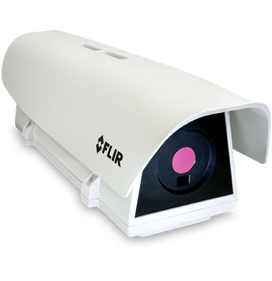

Together, the UL-listed FLIR A70, A500f/A700f, and FH-Series R provide BESS operators with a range of thermal monitoring solutions to strengthen early fire detection, protect valuable infrastructure, and support safer, more reliable energy storage operations.
Learn more about solutions for early fire detection at BESS and other industrial sites here.


